Introduction
Caring for a rabbit involves much more than providing food and a small cage. Rabbits are intelligent, active, social animals that need space, enrichment, proper nutrition, and consistent routines. Rabbit Care 101: Cage Size, Free-Roaming, Litter Training & Hay Diet explains the essentials every new rabbit guardian should understand before bringing a bunny home.
A well-designed living environment can improve your rabbit’s comfort, behavior, and overall wellbeing. At the same time, a balanced hay-based diet supports healthy digestion and dental function. Litter training can also make indoor rabbit ownership much easier.
Whether you are a first-time rabbit owner or improving your current setup, understanding these fundamentals is an excellent place to start. For a broader resource covering everyday rabbit needs, explore this helpful Rabbit Care Pillar for additional guidance.
Rabbit Care 101: Understanding Your Rabbit’s Basic Needs
Rabbits have different needs from cats and dogs. They are prey animals, which means they can hide signs of illness and become stressed by sudden changes. Their environment should therefore feel safe, predictable, and comfortable.
A healthy rabbit needs room to move, appropriate food, clean water, safe flooring, hiding spaces, toys, and regular interaction. Indoor living is generally preferred because it provides better protection from predators, extreme temperatures, and environmental hazards.
Rabbits also need opportunities to express natural behaviors. Digging, chewing, exploring, running, jumping, and foraging are normal parts of rabbit life. Restricting these behaviors can contribute to boredom and unwanted habits.


Good rabbit care is therefore about creating an environment where natural behavior is encouraged rather than suppressed.
Rabbit Care 101: Choosing the Right Cage Size
One of the biggest mistakes new owners make is choosing a cage based only on the rabbit’s current size. Young rabbits grow quickly, and even small breeds need room to stretch, stand, turn, and move comfortably.
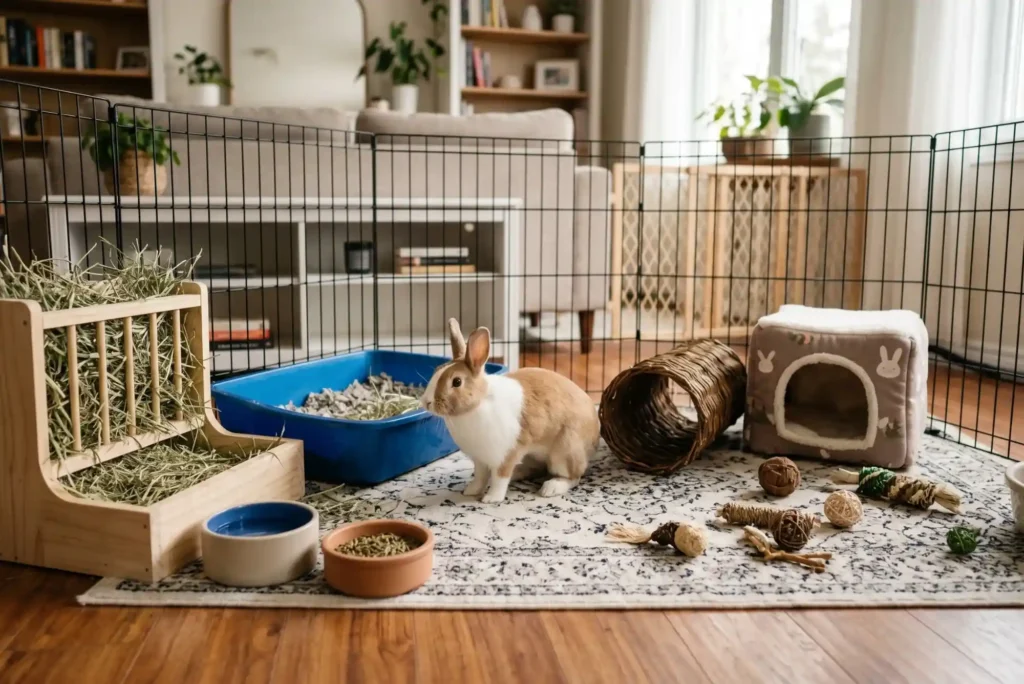
A cage should not be viewed as the rabbit’s entire home. Modern rabbit welfare guidance favors spacious pens, rabbit-proofed rooms, or larger indoor areas. A cage can instead serve as a sleeping or resting area within a much larger enclosure.
The House Rabbit Society explains that a cage can work as part of a broader housing arrangement. It should provide a comfortable resting area while allowing access to a larger exercise space.
The rabbit should be able to stand upright without touching the roof. It should also be able to stretch fully and take several comfortable hops. More space is particularly important when your rabbit spends considerable time inside the enclosure.
Wire flooring should also be avoided whenever possible. Constant contact with wire can contribute to painful foot problems. Solid flooring with suitable traction is much kinder to rabbit feet.
For additional rabbit-friendly information, Vegetative provides a useful starting point for exploring related animal-care resources.
Rabbit Care 101: Why Free-Roaming Matters
Free-roaming is increasingly popular among indoor rabbit guardians. Instead of spending most of the day inside a cage, the rabbit receives access to a safe, rabbit-proofed area.
Free-roaming can provide significantly more opportunities for exercise and exploration. Rabbits can run, stretch, investigate objects, and interact with their surroundings throughout the day.
However, free-roaming does not mean simply opening the cage and leaving the rabbit unattended. Your home must first be made safe.
Electrical cables are among the biggest hazards. Rabbits naturally chew, and exposed wires can cause severe injuries. Houseplants, cleaning chemicals, small objects, sharp materials, and unsafe furniture should also be assessed.
Start with a controlled area if your rabbit is new to the home. Once litter habits and behavior become reliable, gradually expand access to additional rooms.
Rabbit.org recommends using a spacious enclosure or rabbit-proofed indoor environment and gradually increasing boundaries as training improves.
Free-roaming also allows rabbits to become more involved in household life. This can strengthen the bond between rabbit and guardian while providing valuable mental stimulation.
Rabbit Care 101: Creating a Rabbit-Proof Home
A rabbit-proofed home is essential for safe free-roaming. Rabbits investigate their surroundings with their teeth, so anything within reach may become a potential chewing target.
Protect electrical cables with appropriate cord covers. Move toxic plants away from accessible areas. Secure unstable furniture and remove objects that could be swallowed.
Flooring also deserves attention. Smooth floors can make rabbits uncomfortable and reduce their confidence when running. Rugs, mats, and other rabbit-safe surfaces can provide traction.
Give your rabbit appropriate alternatives for chewing. Untreated cardboard, safe wooden toys, willow items, and suitable natural materials can provide enrichment.
A safe home does more than prevent accidents. It gives your rabbit freedom to explore without constant restriction.
Rabbit Care 101: Litter Training Your Rabbit
Rabbits are naturally clean animals and often choose a particular corner for urination. This natural habit makes litter training much easier than many first-time owners expect.
Begin by observing where your rabbit regularly urinates. Place a suitable litter box in that location instead of trying to force the rabbit to use another corner.
The litter box should be large enough for your rabbit to turn around comfortably. It should also have an entry height that makes access easy.
Adding hay near or inside one end of the litter box can encourage regular use. Rabbits commonly enjoy eating hay while using the bathroom, making this arrangement especially practical.
During early training, keep your rabbit’s accessible area relatively small. Once consistent litter habits develop, gradually increase the available space.
Accidents should not be treated as deliberate disobedience. Young rabbits may require extra patience, while unneutered rabbits can be more likely to mark territory.
If litter habits suddenly change, consider whether a health problem could be involved. Persistent changes in urination or toileting behavior deserve veterinary attention.
Rabbit Care 101: Selecting Safe Rabbit Litter
Choosing the correct litter is just as important as choosing the right box. Rabbits may sit inside their litter boxes for extended periods, so the material should be safe and comfortable.
Paper-based and other rabbit-appropriate litter products are commonly used. Avoid dusty, clumping cat litter because rabbits can ingest material while grooming themselves.
Highly aromatic softwood shavings should also be avoided. Rabbit.org specifically advises against pine and cedar shavings because of concerns associated with their aromatic compounds.
Clean the litter box regularly to control odors and maintain hygiene. Fresh hay can be replaced frequently, while the entire box should receive appropriate cleaning.
A clean litter area can also make rabbits more willing to maintain good bathroom habits.
Rabbit Care 101: Why Hay Is the Foundation of the Diet
Hay is one of the most important parts of Rabbit Care 101: Cage Size, Free-Roaming, Litter Training & Hay Diet. Adult rabbits should have continuous access to appropriate grass hay.
Hay supplies the fiber rabbits need for normal digestive function. It also encourages prolonged chewing, which supports natural tooth wear.
Rabbit.org states that hay should make up the majority of a rabbit’s diet, with grass hay forming the foundation for healthy adult rabbits.
Timothy, orchard grass, oat, brome, and other suitable grass hays can be offered. Some rabbits prefer one variety, while others enjoy several types.
Offering different grass hays can encourage eating and provide variety in smell and texture. However, dietary changes should be introduced gradually to avoid digestive upset.
Fresh hay should smell pleasant and remain dry. Damp, moldy, dusty, or spoiled hay should never be given to a rabbit.
Rabbit Care 101: Hay, Pellets, Greens, and Treats
Hay should remain the foundation of the adult rabbit diet. Fresh leafy greens can complement hay and provide additional nutrients and moisture.
Quality rabbit pellets can also have a place in the diet, but they should not replace unlimited hay. Overfeeding pellets may contribute to excessive calorie intake because they are much easier to consume than fibrous hay.
Treats should remain occasional and small. Fruits and sweet vegetables contain natural sugars, so they should not become a major part of everyday feeding.
Fresh drinking water should always be available. Heavy bowls are often practical because they are less likely to tip during normal rabbit activity.
Dietary needs can vary depending on age, health, weight, and other circumstances. Baby rabbits, older rabbits, and rabbits with medical conditions may require different nutritional approaches.
For detailed feeding guidance, rabbit guardians can also consult the House Rabbit Society Standards, which provides extensive rabbit-care information covering diet, housing, behavior, and health.
Rabbit Care 101: Enrichment and Exercise
Exercise is another important part of healthy rabbit care. Rabbits need opportunities to run, jump, explore, and investigate their surroundings every day.
A large enclosure can provide basic movement, but enrichment makes the environment more interesting. Cardboard tunnels, safe toys, hiding areas, and digging opportunities can encourage natural behaviors.
Food-based enrichment can also be useful. Hiding small amounts of appropriate food among hay can encourage foraging behavior.
Rotate toys occasionally instead of giving your rabbit the same environment every day. This simple change can make familiar objects feel more interesting.
Mental stimulation is especially important for rabbits that spend most of their lives indoors.
Rabbit Care 101: Building Trust With Your Rabbit
Rabbits usually respond better to patience than forced handling. Spend time near your rabbit and allow them to approach you voluntarily.
Sit on the floor and speak calmly. Offer appropriate food from your hand once your rabbit feels comfortable.
Avoid chasing a rabbit around the room. This can make the animal associate human interaction with fear.
Over time, many rabbits become affectionate companions. Some enjoy sitting beside their guardians, while others prefer interaction on their own terms.
Understanding body language can make communication easier. A relaxed rabbit may stretch out, flop onto its side, or gently grind its teeth in contentment.
Rabbit Care 101: Common Mistakes to Avoid
Many rabbit-care problems begin with misconceptions about their needs. One common mistake is keeping a rabbit in a small cage for most of the day.
Another mistake is feeding too many pellets, treats, carrots, or fruit while providing insufficient hay. Rabbits need a fiber-focused diet rather than a treat-heavy menu.
Poor litter choices can also cause problems. Avoid materials that are dusty, clumping, highly aromatic, or otherwise unsuitable for rabbits.
Ignoring rabbit-proofing is another serious mistake. A rabbit can chew through an electrical cable within seconds.
Finally, do not assume that a rabbit’s lack of obvious symptoms means everything is fine. Rabbits can hide illness, so changes in appetite, behavior, droppings, or activity should be taken seriously.
Frequently Asked Questions
What do rabbits eat every day?
Adult rabbits should have unlimited access to suitable grass hay. Fresh leafy greens and measured quality pellets can complement the diet. Treats should remain limited.
How big should a rabbit cage be?
A rabbit needs enough space to stand, stretch, turn, and move comfortably. Ideally, the enclosure should connect to a larger exercise area rather than functioning as permanent confinement. Rabbit.org recommends spacious housing and describes cages as only one component of a broader living arrangement.
Can rabbits be free-roam in the house?
Yes, rabbits can live with extensive free-roaming access when the home is properly rabbit-proofed. Start with a safe, controlled area and gradually increase access as your rabbit becomes comfortable and reliably litter trained.
Are rabbits easy to litter train?
Rabbits are naturally clean and often choose a preferred bathroom corner. Placing a suitably sized litter box in that location can make training easier. Patience and consistency are especially important with young rabbits.
What type of hay is best for rabbits?
Grass hays such as Timothy, orchard grass, brome, and oat hay are commonly suitable for adult rabbits. The best choice is often a fresh, high-quality hay that your rabbit consistently enjoys eating.
How much hay should a rabbit eat?
Hay should be available freely throughout the day. It should form the primary component of an adult rabbit’s diet because its fiber supports digestive health and natural tooth wear.
Do rabbits need to live in a cage?
A cage does not need to be a rabbit’s entire living space. Modern indoor rabbit care commonly uses exercise pens, rabbit-proofed rooms, condos, or free-roaming arrangements. A cage can instead provide a private resting area.
Conclusion
Good rabbit care is built around space, nutrition, cleanliness, safety, enrichment, and patience. A rabbit needs more than a cage and a food bowl. It needs an environment that supports natural movement and behavior.
Related Reading: Bearded Dragon Setup: UVB Lighting, Basking Temperatures & Substrate
Related Reading: Oracle Revenue Management Billing (ORMB) Training
Related Reading: Free Boilers for Pensioners in Scotland: Eligibility and Benefits
Related Reading: GI Stasis in Rabbits: Early Warning Signs, Emergency Care & Prevention — full guide
Related Reading: Rat Care Guide: Why Fancy Rats Must Live in Pairs, Diet & Intelligence