Introduction
Pacman frogs are fascinating amphibians with enormous appetites, distinctive round bodies, and an unusual habit of spending much of their time buried in substrate. Although they are often described as beginner-friendly pets, proper Pacman frog care requires more than putting a frog in a tank and feeding it occasionally. Their sensitive skin, burrowing behavior, humidity requirements, and powerful feeding response all need to be considered.
A good Pacman frog care routine starts with a suitable enclosure, moisture-retaining substrate, stable temperatures, clean water, and a varied carnivorous diet. Nightcrawlers can be an excellent staple food when appropriately sized, while handling should generally be limited because these frogs have delicate skin and can deliver a surprisingly strong bite.
With the right environment and consistent husbandry, Pacman frogs can thrive for many years. This guide explains how to build a suitable enclosure, maintain humidity, use nightcrawlers correctly, feed safely, and handle your frog only when necessary.
Understanding Pacman Frog Care
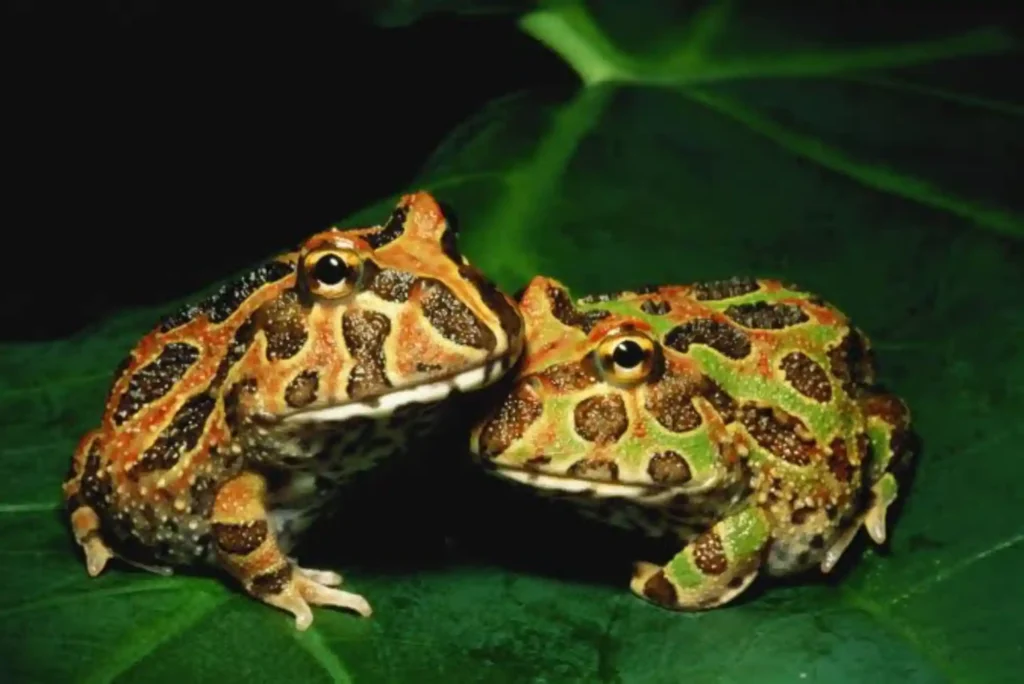
The name “Pacman frog” commonly refers to frogs in the genus Ceratophrys, including commonly kept species such as Cranwell’s horned frog and ornate horned frogs. These frogs are terrestrial ambush predators native to South America. Rather than actively exploring a large enclosure, they often sit partially buried and wait for prey to move within striking distance.
That natural behavior explains why Pacman frog care differs from the care of highly active reptiles. Floor space is more important than climbing height, and deep, moist substrate is one of the most important features of the habitat.
Pacman frogs are also solitary. Keeping two together can result in serious injury or cannibalism, particularly when one frog is smaller than the other. A single frog should therefore have its own enclosure.


Pacman Frog Enclosure Setup
A suitable enclosure should provide enough floor space for the frog to turn, burrow, and reposition itself comfortably. Care guides commonly recommend an enclosure in the 10–20 gallon range for a single frog, while some modern husbandry recommendations favor larger floor dimensions as the frog reaches adult size.
For Pacman frog care, enclosure design should prioritize floor area rather than height. These frogs are terrestrial and spend much of their time on or underneath the substrate.
The enclosure should have a secure lid with adequate ventilation. Good ventilation matters because humidity needs to remain elevated without allowing the enclosure to become stagnant, moldy, or excessively wet.
Choosing the Right Substrate
Substrate is central to successful Pacman frog care because burrowing is normal behavior. Coconut fiber, suitable organic soil mixes, and other soft moisture-retaining substrates can work when they are free from fertilizers, pesticides, sharp particles, and chemical additives.
Provide enough depth for the frog to bury itself comfortably. Around 8–10 cm or more is commonly recommended for adult frogs, although deeper substrate can provide additional burrowing opportunities when the enclosure allows it.
The substrate should feel moist rather than soaked. If squeezing it produces excessive water or the enclosure smells swampy, there is probably too much moisture. On the other hand, substrate that becomes completely dry can contribute to dehydration.
Avoid gravel and other hard, loose materials that can potentially be swallowed during feeding. Feeding from a clean dish or carefully controlling prey placement can also reduce accidental substrate ingestion.
Water and Hides
A shallow water dish should always be available. Use dechlorinated water because amphibian skin is highly permeable and can absorb substances from the surrounding environment. The dish should be shallow enough that the frog can enter and leave easily rather than functioning like a deep swimming pool.
A simple hide, leaf cover, or other secure decoration can make the enclosure feel safer. However, elaborate decorations are not necessary. Good Pacman frog care is often about providing the correct basic conditions rather than filling the enclosure with unnecessary objects.
Pacman Frog Humidity Requirements
Humidity is one of the most important parts of Pacman frog care. Most current veterinary and husbandry sources recommend maintaining humidity around 60–80%, with the exact level influenced by ventilation, substrate moisture, temperature, and the frog’s behavior.
A digital hygrometer should be used rather than estimating humidity by appearance. A tank can look damp while actually having inadequate humidity, or it can appear appropriately humid while the substrate is becoming waterlogged.
How to Maintain Proper Humidity
Mist the enclosure with dechlorinated water as necessary to maintain the desired range. The goal is not to keep every surface dripping wet. Instead, maintain a moist substrate and an appropriate humid environment while allowing sufficient ventilation.
If humidity repeatedly falls too low, first investigate the enclosure itself. Excessive ventilation, a very dry room, shallow substrate, or inadequate moisture retention may be contributing to the problem.
Partially covering a screen top can sometimes help reduce unnecessary moisture loss, provided sufficient ventilation remains available. A hygrometer should guide adjustments rather than relying on a fixed misting schedule.
Humidity should also be considered alongside temperature. A warm enclosure can lose moisture faster, so Pacman frog care involves monitoring both measurements rather than treating humidity as an isolated number.
Temperature and Lighting
A stable temperature gradient gives the frog some environmental choice. Veterinary guidance commonly places daytime temperatures around 75–83°F (24–28°C), with a somewhat cooler nighttime period. Other specialist sources provide slightly different ranges, so the important principle is avoiding prolonged extremes and monitoring actual temperatures with reliable equipment.
Use digital thermometers to monitor the enclosure. Heating equipment should be controlled safely, preferably with a thermostat, because uncontrolled heaters can create dangerous hot spots.
Pacman frogs are primarily nocturnal, so they do not require intense daytime lighting. A consistent day-night cycle can still help establish a natural routine. Low-level UVB is considered optional by some care sources, while others recommend providing low-output UVB with appropriate shaded areas.
Pacman Frog Diet: Why Nightcrawlers Are Useful
Pacman frogs are carnivores with powerful feeding responses. A varied diet can include appropriately sized earthworms or nightcrawlers, crickets, roaches, and other suitable feeder animals.
Nightcrawlers are particularly useful because they provide a nutritious, moisture-rich prey option and can be offered without requiring the frog to chase fast-moving insects. Current care guidance from veterinary and specialist sources includes earthworms or nightcrawlers among suitable feeder choices.
How to Feed Nightcrawlers
When using nightcrawlers for Pacman frog care, select worms from a safe source intended for animal feeding. Avoid worms collected from lawns, gardens, roadsides, or areas that may have been treated with pesticides, fertilizers, or other chemicals.
The worm should be appropriately sized for the frog. Although Pacman frogs have exceptionally large mouths, oversized prey is not automatically better. A sensible approach is to offer prey that the frog can swallow comfortably rather than relying on its ability to attempt enormous meals.
Use feeding tongs when possible. This reduces the chance that the frog mistakes your fingers for food and allows you to control the prey’s position.
How Often Should a Pacman Frog Eat?
Feeding frequency depends on age, size, body condition, prey type, and individual metabolism. Juveniles generally require more frequent feeding than adults, while adult frogs are commonly fed once or twice weekly or at intervals of several days.
Rather than feeding an adult simply because it appears interested in food, monitor its body condition. Pacman frogs are enthusiastic eaters and can become overweight when offered excessive amounts of high-calorie prey.
A varied diet is an important part of Pacman frog care. Nightcrawlers can be a major component, but rotating suitable prey helps provide nutritional variety.
Calcium and Vitamin Supplements
Feeder insects should generally be gut-loaded before being offered. Appropriate calcium and vitamin supplementation may also be necessary, particularly for growing frogs.
The exact supplementation schedule can vary according to the frog’s age, diet, UVB exposure, and veterinary recommendations. Some veterinary care sheets recommend calcium several times per week and a multivitamin periodically, while juvenile frogs may require more frequent supplementation.
Avoid assuming that more vitamins are always better. Excess supplementation can also create nutritional problems. A balanced feeding program should consider the entire diet rather than adding increasingly large quantities of supplements.
Pacman Frog Handling: Should You Pick It Up?
One of the most important things to understand about Pacman frog care is that these frogs are better considered display animals than hands-on pets.
Their skin is delicate and highly permeable. Oils, salts, residues, and microorganisms on human hands can potentially irritate or harm amphibian skin. Pacman frogs can also bite when they mistake a moving finger for prey. Veterinary sources therefore recommend minimizing handling.
When Handling Is Necessary
There may be times when you need to move your frog during enclosure cleaning, transportation, or veterinary examination. In those situations, use clean, powder-free gloves moistened with dechlorinated water, or another appropriate method recommended by an exotic-animal veterinarian.
Never grab the frog unnecessarily or repeatedly pick it up for entertainment. Keep movements slow and controlled, and avoid dropping or squeezing the animal.
Handwashing is equally important after contact with the frog or enclosure because amphibians can carry organisms such as Salmonella.
Cleaning and Daily Pacman Frog Care
A clean enclosure is essential because moist environments can encourage bacterial and fungal growth when waste accumulates.
Remove visible waste and uneaten prey promptly. Replace dirty water immediately rather than waiting for the next scheduled cleaning. Regularly inspect the substrate for areas that have become excessively wet or contaminated.
A full substrate replacement should be performed when the material becomes heavily soiled or begins to smell. The exact frequency depends on enclosure size, substrate type, feeding habits, and whether a bioactive setup is being used.
Daily observation is also valuable. Look for changes in appetite, skin appearance, posture, breathing, activity, and normal burrowing behavior.
Common Pacman Frog Care Mistakes
One common mistake is treating humidity as something that can be guessed. A hygrometer provides much more useful information than simply looking at the substrate.
Another mistake is overfeeding. Pacman frogs have an impressive appetite, but their willingness to eat does not necessarily mean they need another meal.
Using untreated tap water is another avoidable problem. Because amphibian skin is so permeable, water quality should always be taken seriously.
Finally, frequent handling can cause unnecessary stress and skin exposure. Observing your frog quietly is usually a better way to interact with it.
Signs Your Pacman Frog May Need Veterinary Attention
Changes in appetite do not always mean an emergency, but persistent refusal to eat, unexplained weight loss, abnormal swelling, skin lesions, breathing difficulty, severe lethargy, or problems moving normally deserve attention.
A frog that cannot bury itself, repeatedly struggles to right itself, or develops unusual discoloration should also be evaluated rather than being treated through guesswork.
An exotic-animal veterinarian can assess husbandry, nutrition, parasites, infections, and other potential causes. Preventive veterinary examinations and fecal testing are recommended by some exotic veterinary practices as part of responsible long-term care.
Building a Healthy Pacman Frog Routine
Successful Pacman frog care comes down to consistency. Your frog needs a secure enclosure, deep moisture-retaining substrate, suitable humidity, stable temperatures, clean dechlorinated water, and a nutritionally appropriate diet.
Nightcrawlers can be a valuable part of that diet, especially when combined with other suitable prey and appropriate supplementation. At the same time, remember that a Pacman frog’s enthusiasm for food does not mean it should be fed excessively.
FAQs
What humidity does a Pacman frog need?
A commonly recommended humidity range is approximately 60–80%. Use a digital hygrometer to monitor the enclosure and keep the substrate moist without making it waterlogged.
How often should I feed my Pacman frog?
Juveniles generally eat more frequently than adults. Adults are commonly fed once or twice a week, although feeding frequency should be adjusted according to age, body condition, prey size, and overall health.
Can Pacman frogs eat nightcrawlers?
Yes. Appropriately sized nightcrawlers or earthworms can be an excellent component of a Pacman frog’s diet. Use worms from a safe, chemical-free source and offer a size the frog can swallow comfortably.
Do Pacman frogs like to be handled?
Pacman frogs generally should not be handled routinely. Their permeable skin is sensitive to substances on human hands, and they may bite when they interpret movement as prey. Handle only when necessary and use appropriate hygiene and wet, powder-free gloves.
Do Pacman frogs need a heat lamp?
They need an appropriate heat source, but the exact equipment depends on room temperature, enclosure design, and ventilation. Any heating device should be carefully controlled and monitored with reliable thermometers and, where appropriate, a thermostat.
How long can a Pacman frog live?
With appropriate husbandry, Pacman frogs can live for many years. Veterinary and specialist care sources commonly report lifespans around 8–15 years, although individual longevity varies.
Related Reading: Corn Snake Care Guide: Enclosure Size, Aspen Substrate & Temperament
Related Reading: Rat Care Guide: Why Fancy Rats Must Live in Pairs, Diet & Intelligence