Introduction
Keeping a corn snake healthy is less complicated than caring for many other reptiles, but good results depend on getting the basics right. The enclosure needs enough room for movement, the temperature must provide a reliable warm-to-cool gradient, and the substrate should support natural behavior without creating unnecessary health risks. Understanding temperament is equally important because a calm snake still has specific needs when it comes to handling, feeding, and settling into a new home.
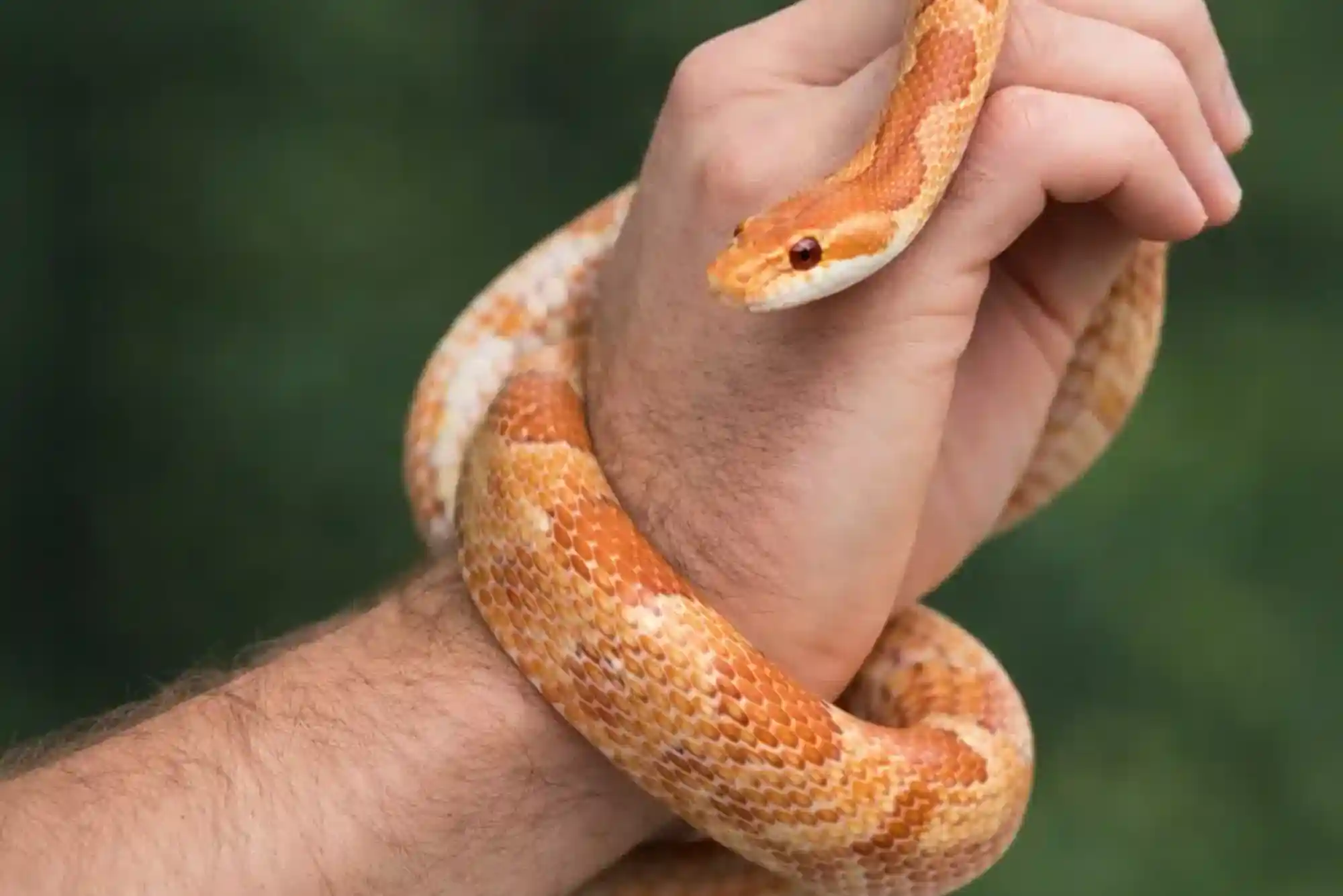
This corn snake care guide explains the essentials in practical terms, with particular attention to enclosure size, aspen substrate, heating, humidity, feeding, handling, and temperament. Corn snakes (Pantherophis guttatus) are nonvenomous, active, semi-arboreal snakes that can reach around 5 feet in length and may live for 15–25 years with appropriate care.
Understanding Corn Snake Temperament
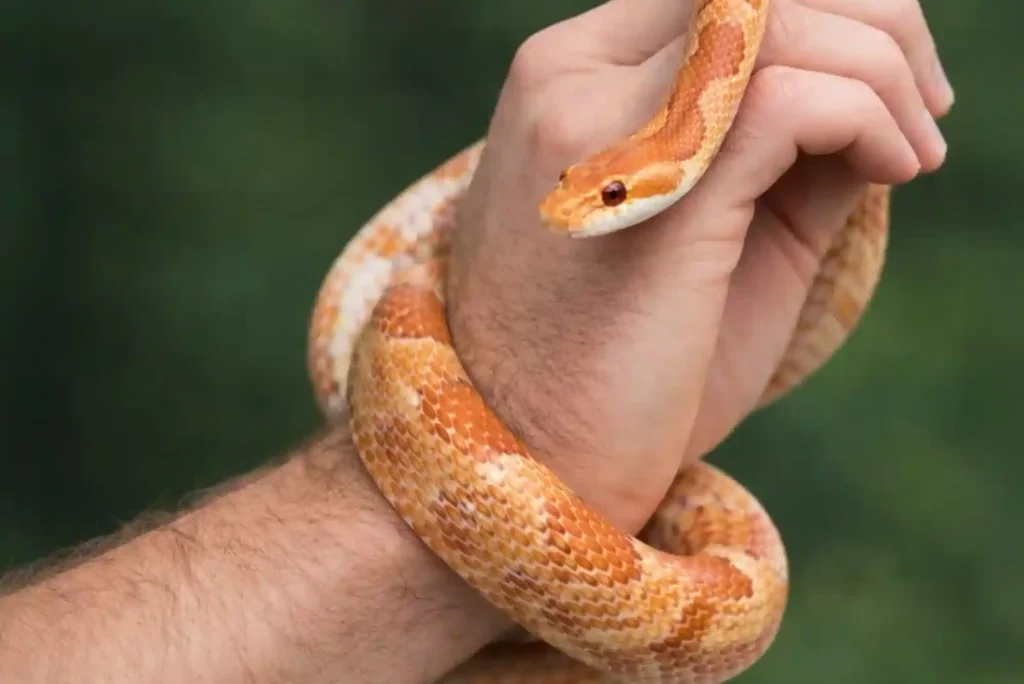
Corn snakes are widely regarded as manageable pets because many captive-bred individuals tolerate regular, gentle human interaction well. They are active rather than sluggish, however, and their personality can vary from one snake to another.
A young corn snake may initially be nervous in a new environment. It may spend much of its time hiding, move quickly when approached, or occasionally strike when frightened. This behavior does not necessarily mean the snake is aggressive. A new snake is dealing with an unfamiliar enclosure, unfamiliar smells, and a large human approaching from above.
With time and consistent handling, many corn snakes become calmer and easier to interact with. Their natural behavior is more accurately described as defensive or food-oriented than intentionally aggressive. For example, a snake that associates the opening of its enclosure with feeding may sometimes move toward the keeper quickly because it expects food.
The best approach is to let the snake settle after bringing it home and avoid excessive handling during stressful periods. Handling should be calm, controlled, and supportive of the snake’s body rather than involving sudden grabbing.


Choosing the Right Corn Snake Enclosure Size
Enclosure size is one of the most important parts of successful corn snake care. A common mistake is assuming that snakes need very little space simply because they spend much of their time curled up. Corn snakes are active explorers and capable climbers, so their enclosure should allow meaningful movement.
For an adult corn snake, a commonly recommended minimum enclosure is 48 inches long by 24 inches wide by 24 inches high. Another useful approach is to select dimensions that allow the snake to stretch out fully while still providing floor space and climbing opportunities. ReptiFiles recommends using the snake’s length as the enclosure’s minimum length, with approximately half that length as the width and at least 24 inches of height.
This means an enclosure measuring 4 feet by 2 feet by 2 feet can work well for many adult corn snakes, although a larger enclosure can provide additional opportunities for climbing, exploring, and enrichment.
The enclosure should also be escape-proof. Corn snakes are slender and remarkably capable of finding small gaps. A secure lid, reliable doors, and properly fitted ventilation are essential. Veterinary guidance likewise emphasizes that snake enclosures should be well ventilated, spacious, and securely closed.
Should a Baby Corn Snake Have a Smaller Enclosure?
A hatchling can be kept in a smaller enclosure, particularly when escape prevention and monitoring are concerns. Young snakes naturally spend more time hiding because they are vulnerable to predators.
However, a small enclosure is not automatically better. A larger enclosure can work for a young corn snake if it contains plenty of appropriately sized hides, cover, branches, and other furnishings. The key is creating a secure environment rather than simply reducing available space.
As the snake grows, its enclosure should be evaluated again rather than relying on a tank size chosen when it was a hatchling.
Aspen Substrate for Corn Snakes
Aspen has traditionally been a popular bedding choice for corn snakes because it is inexpensive, lightweight, absorbent, and allows burrowing. Many keepers appreciate the way corn snakes can create tunnels through loose aspen bedding.
However, aspen is not automatically the best substrate for every enclosure. Its biggest limitation is moisture retention. ReptiFiles specifically notes that aspen can work in some circumstances but is less suitable where maintaining higher humidity is necessary.
If you choose aspen, it should remain clean and dry rather than becoming damp or moldy. Wet bedding should be removed promptly. The enclosure also needs a suitable humid hide when additional moisture is needed during shedding.
There is some disagreement among modern care sources about the ideal humidity range for corn snakes. The Royal Veterinary College recommends monitoring humidity while keeping the enclosure relatively dry, whereas ReptiFiles recommends a higher average range of approximately 65–75%.
This difference illustrates why keepers should consider the complete enclosure rather than chasing a single number. Good ventilation, access to water, appropriate hydration, proper shedding, and the snake’s overall condition all matter.
Is Aspen Safe for Corn Snakes?
Aspen is widely used by corn snake keepers, but substrate choice deserves careful consideration. Veterinary guidance from the Royal Veterinary College cautions against wood-chip-based substrates because of potential ingestion and blockage concerns.
ReptiFiles also distinguishes between different types of wood-based products and recommends avoiding pine and cedar, while noting limitations associated with aspen.
For this reason, experienced keepers should choose substrate based on the enclosure’s humidity requirements, ventilation, burrowing opportunities, cleaning routine, and veterinary guidance rather than assuming that every loose substrate is interchangeable.
Temperature and Heating in Corn Snake Care
Corn snakes are ectothermic, meaning they rely on environmental heat to regulate body temperature. Their enclosure should therefore provide a gradient instead of being maintained at one identical temperature throughout.
A warm basking area allows the snake to heat itself, while the opposite side should remain cooler. ReptiFiles gives a basking target around 90°F (32°C) and a cool-zone range around 75–82°F (24–27°C). The Royal Veterinary College similarly recommends a basking area around 32°C and a cooler area around 25°C.
The snake should be able to move between these areas whenever it needs to. This is why enclosure length matters: a very small enclosure can make it difficult to establish a useful thermal gradient.
Temperatures should always be measured rather than estimated by touch. Digital thermometers and appropriate temperature probes make it much easier to identify problems before they affect the snake.
Heating equipment should also be controlled safely. Heat sources can cause burns or overheating if installed incorrectly, which is why veterinary guidance recommends guarding heat sources and monitoring enclosure temperatures carefully.
Humidity, Water and Shedding
Fresh drinking water should always be available. A sturdy water bowl that cannot easily be tipped over is practical for most setups.
Humidity requirements can vary with enclosure design, climate, ventilation, and individual care philosophy. What matters most is avoiding prolonged extremes and monitoring the snake during shedding.
When a corn snake approaches a shed, its behavior and appearance may change. Its colors can look duller, and its eyes may become cloudy. During this period, unnecessary handling should be minimized.
A humid hide can give the snake a controlled place to access additional moisture. If you use moss inside a humid hide, it should be monitored regularly and replaced when dirty or moldy.
Good ventilation remains important even when humidity needs to be increased. Simply making an enclosure constantly wet is not an appropriate substitute for balanced humidity management.
Creating a Natural and Enriching Habitat
A good corn snake enclosure should be more than an empty box containing a heat source and water bowl. Corn snakes naturally explore, climb, hide, and move through different forms of cover.
Branches, sturdy climbing structures, artificial plants, cork pieces, and appropriately sized hides can make the enclosure more interesting. Hides should be available in both warmer and cooler areas so the snake does not have to sacrifice security to regulate its temperature.
Young snakes often feel more secure when there is plenty of visual cover. An enclosure that looks spacious to a human can feel extremely exposed to a small snake. Adding clutter and secure hiding spaces can make the environment feel safer without reducing usable floor space.
Avoid sharp decorations or unstable objects that could fall onto the snake. Anything placed inside the enclosure should be sturdy enough to withstand climbing and exploration.
Feeding Your Corn Snake
Corn snakes are carnivorous and are commonly fed appropriately sized prey items. The size and feeding frequency should be adjusted according to the snake’s age, body condition, growth, and individual needs.
Frozen-thawed prey is commonly used by captive keepers because it eliminates many risks associated with live prey. Prey should be appropriately sized rather than being excessively large.
Handling should also be planned around feeding. A snake that has recently eaten needs time to digest its meal, and unnecessary handling immediately afterward can create stress and potentially interfere with digestion.
It is also worth understanding that a feeding response is not the same thing as aggression. A corn snake that quickly approaches a hand at feeding time may simply have learned that movement near the enclosure predicts food.
Handling a Corn Snake Safely
One of the reasons corn snakes are popular pets is their generally manageable temperament. Nevertheless, handling should be approached with patience.
Allow a newly acquired snake time to become comfortable before beginning frequent interaction. When handling, support the snake’s body and allow it to move naturally through your hands. Avoid squeezing, chasing, grabbing the tail, or restraining the head unnecessarily.
Short, calm sessions are usually easier for a nervous snake than prolonged handling. Over time, many corn snakes become accustomed to their keeper and move calmly during routine handling.
Handling should be reduced when the snake is preparing to shed, immediately after feeding, or showing clear signs of stress.
Cleaning and Hygiene
A clean enclosure is essential for long-term health. Waste should be removed as soon as it is noticed, while the enclosure should receive regular deeper cleaning.
Veterinary guidance recommends removing feces and dried urates regularly and cleaning the enclosure at least weekly, depending on the setup.
Loose substrate makes spot cleaning particularly important because contaminated bedding can remain hidden beneath the surface. If you use aspen, remove soiled sections promptly rather than allowing urine or feces to remain in the enclosure.
The water bowl should also be cleaned regularly, especially if substrate or waste enters it.
Common Corn Snake Care Mistakes
Many husbandry problems come from trying to simplify the setup too much. A tiny enclosure, unreliable heating, inadequate hiding places, poor ventilation, or inappropriate substrate can all create avoidable problems.
Another common mistake is judging a snake’s health by activity alone. Corn snakes naturally spend considerable time hiding, particularly after meals or during shedding. Appetite, body condition, breathing, shedding quality, feces, and general behavior provide more useful information than simply asking whether the snake is visible every day.
It is also important not to house multiple corn snakes together casually. ReptiFiles notes that cohabitation is an advanced practice with significant requirements and is not recommended as a simple space-saving strategy.
When something seems abnormal, a veterinarian experienced with reptiles is the appropriate source of medical advice.
Building a Healthy Corn Snake Home
Successful corn snake care comes down to creating an environment that allows natural behavior while keeping temperature, humidity, hygiene, and security under control. Start with a properly sized enclosure, provide secure warm and cool areas, use appropriate substrate, offer multiple hides and enrichment, and monitor your snake rather than relying on guesswork.
Aspen can be useful in some setups, but substrate choice should match your humidity management and overall husbandry approach. Most importantly, remember that a corn snake is a long-term commitment. With thoughtful care and regular observation, these active and fascinating reptiles can become rewarding companions for many years.
FAQs
How big should a corn snake enclosure be?
An adult corn snake commonly benefits from an enclosure at least 48 inches long, 24 inches wide, and 24 inches high. Larger can be appropriate when the enclosure is safely designed and furnished with suitable hides and climbing opportunities.
Are corn snakes good pets?
Corn snakes are often considered suitable for first-time snake keepers because they are generally hardy, manageable in size, and commonly tolerant of human interaction. They still require a properly heated, secure, enriched enclosure and a long-term commitment because they can live for many years.
Do corn snakes like to be held?
Many captive corn snakes become comfortable with gentle handling, although individual personalities differ. A snake should never be forced into interaction when it is clearly stressed, preparing to shed, or digesting a meal.
What is the best substrate for a corn snake?
There is no single substrate that is perfect for every setup. Aspen is commonly used because it supports burrowing, but it does not retain moisture well. Other substrates may be more appropriate when humidity management is a priority.
Can corn snakes live in a 40-gallon tank?
A 40-gallon enclosure may be inadequate for a fully grown corn snake depending on its dimensions. Rather than choosing a tank solely by gallon capacity, compare the enclosure’s length, width, and height with the snake’s adult size. A commonly recommended adult minimum is 48 × 24 × 24 inches.
What temperature should a corn snake tank be?
The enclosure should have a temperature gradient. A basking area around 90°F (32°C) and a cooler zone around 75–82°F (24–27°C) are commonly recommended targets. Always measure temperatures with reliable equipment rather than estimating them.