Introduction
Providing the right exercise equipment is crucial for your pet’s daily health and happiness. Small pets run miles every single night in the wild. Domestic rodents need a safe outlet for this endless natural energy. Without proper equipment, caged pets often suffer from stress and boredom. Choosing the right gear prevents dangerous health issues down the road. Pet owners face a massive market filled with various exercise accessories. Two popular designs dominate the conversation among small animal enthusiasts today. These specific options offer distinct movement styles and spatial layouts. Understanding their mechanical differences helps you make an informed purchasing decision. Every pet keeper wants to protect their furry friend from injuries. Physical safety must always come first when buying any habitat accessory. Let us dive deep into the mechanics of popular exercise items.
Why Hamster Wheel Safety Matters
Understanding skeletal anatomy helps explain why certain exercise items cause harm. Small rodents possess delicate, flexible backbones that curve naturally. A poorly sized accessory forces this spine into an unnatural, upward bend. Running on a curved track for hours strains muscles and ligaments. Over time, this repetitive stress leads to permanent skeletal deformities. Spinal injuries cause severe chronic pain and reduce your pet’s lifespan. Furthermore, improper sizing forces the head upward during high-speed sprints. This awkward posture creates breathing difficulties and general physical exhaustion. Selecting the Best Wheels for Hamsters: Silent Spinners vs Flying Saucers (Spine Safety) ensures proper posture. Large diameters keep the spine completely straight during nighttime runs. Flat running surfaces eliminate unnatural sideways twisting of the hips. Protecting spinal health guarantees your little companion stays active and pain-free. Always measure your pet from nose to tail before purchasing gear. A bigger habitat accessory is always safer than a cramped one.
Silent Spinners: Design and Mechanics
Traditional upright accessories remain a staple in many small animal cages. These upright circular tracks rotate around a central fixed axle. Modern upgrades feature enclosed rear walls to prevent tail pinching. High-end models utilize dual ball-bearing systems for smooth rotations. This engineering marvel eliminates annoying squeaking sounds during the night. Owners can sleep peacefully while their pets burn off excess calories. However, upright models require careful sizing based on species. Syrian pets need an absolute minimum diameter of eleven inches. Dwarf breeds manage well with eight to ten-inch upright models. Smaller diameters inevitably force the spine into a dangerous upward curve. Always check the rear axle area for dangerous pinch points. Exposed moving parts can catch long fur or delicate tails. Selecting a solid running track prevents toes from slipping through rungs. Mesh or wire tracks cause painful conditions like bumblefoot over time. Smooth plastic or wooden surfaces offer a much safer running experience.
Flying Saucers: Design and Mechanics
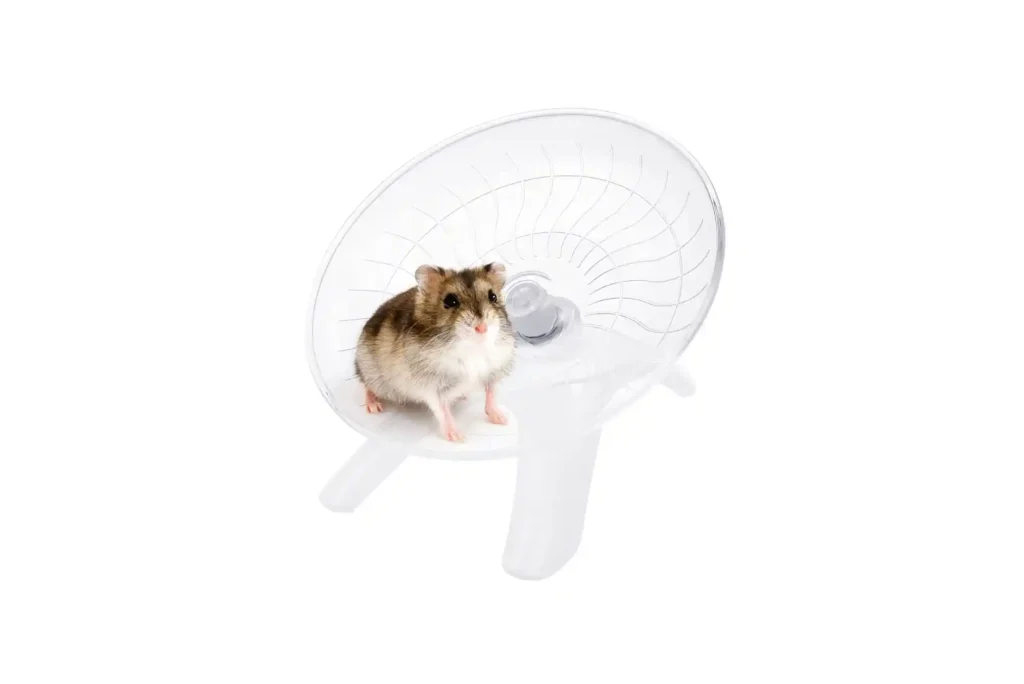
Disc-shaped exercise saucers offer a completely different running angle. Instead of a vertical circle, these devices use a tilted disc. Pets run across a flat, angled surface rather than an upright ring. This unique layout eliminates the arched back associated with small wheels. Your pet’s spine remains completely flat and neutral during sprints. Saucers also allow animals to hop on and off with ease. There are no restrictive side walls or overhead axles to navigate. This open design makes saucers popular for energetic young rodents. However, saucers demand a significant amount of floor space. Large saucer models take up a huge portion of cage territory. Fitting a proper saucer alongside hides and tunnels requires careful planning. Additionally, fast runners can sometimes slide off the tilted disc. Centrifugal force occasionally launches inexperienced pets across the enclosure. Placing the saucer on deep bedding cushions any accidental flying leaps. Selecting a textured plastic surface improves traction during high-speed runs.
Comparing Spine Safety and Ergonomics
Evaluating spinal alignment reveals distinct differences between both popular designs. Upright models rely entirely on diameter to protect the back. If the circle is too small, spinal bending occurs instantly. Conversely, a correctly sized upright track keeps the back straight. Saucers naturally promote a flat spine due to the saucer’s disc layout. There is zero vertical arching required to navigate a flat disc. Yet, saucers introduce a different type of physical strain entirely. Running on a tilted angle forces one leg to work harder. This uneven stride can strain hip joints during extended running sessions. Some small animal experts worry about lateral spinal twisting on discs. Upright tracks encourage symmetrical movement for both left and right sides. Balancing these biomechanical pros and cons requires knowing your pet. Observe your animal running to check for any visible back arching. Switch equipment immediately if you notice stiffness or limping in your pet.
Noise Levels and Maintenance
Nighttime silence remains a top priority for most pet owners. Cheap upright accessories often develop a high-pitched squeak over time. Applying a drop of vegetable oil to the bearing usually helps. Premium silent models use enclosed ball bearings for whisper-quiet performance. These advanced designs stay quiet even after months of heavy use. Saucers generate very little axle noise due to their stable base. However, heavy runners might cause the saucer base to rattle. Placing the saucer on a thick mat absorbs these low-frequency vibrations. Cleaning both types of exercise gear requires regular daily maintenance. Small pets frequently urinate while running on their favorite tracks. Plastic models wipe down easily with warm water and pet-safe soap. Wooden saucers absorb urine and require specialized non-toxic sealants. Always dry exercise equipment thoroughly before returning it to the enclosure. Hygiene prevents bacterial buildup and protects delicate respiratory systems.


Sizing Guide for Different Species
Matching equipment dimensions to your specific pet species prevents injury. Syrian pets grow quite large and require massive exercise accessories. Dwarf hamsters, Roborovskis, and Chinese breeds need smaller dimensions. Chinese hamsters have longer bodies and benefit from extra clearance space. Campbells and Winter Whites need stable footing for their stocky frames. Using undersized gear ruins the benefits of any exercise routine. Measure your adult animal before shopping for permanent enclosure upgrades. Keep in mind that growing babies will quickly outgrow small gear. Buying the adult-sized equipment initially saves you money later on. Check manufacturer specifications carefully rather than relying on product photos. Many marketing images feature animals that are far too large. Prioritize a flat, uncurved spine above all other sizing factors.
Common Mistakes to Avoid
Many well-meaning owners make critical errors when buying exercise gear. Purchasing wire wheels remains the most dangerous mistake you can make. Wire rungs trap tiny feet and break fragile bones instantly. Always choose solid surfaces with good traction instead of wire mesh. Another frequent error involves ignoring the physical size of the animal. Fitting a large Syrian into an eight-inch wheel causes severe damage. Failing to secure heavy saucers can lead to tipping hazards. A falling saucer crushes hiding pets underneath the heavy plastic disc. Placing accessories directly on shallow bedding causes wobbling and loud noises. Set your exercise equipment firmly on the cage floor or platform. Avoid cramped cages that force you to buy substandard small gear. Your pet’s health depends entirely on having adequate living space. Educating yourself on proper husbandry prevents heartbreaking veterinary emergency visits.
Frequently Asked Questions
What is the best wheel size for a Syrian hamster?
Syrian hamsters need a wheel that is at least eleven inches across. Anything smaller forces their growing spine into a painful upward curve.
Are flying saucers better for hamsters than wheels?
Saucers keep the spine flat but can strain hips due to the tilt. Upright wheels with proper diameters provide a more balanced running stride.
How do I stop a squeaky hamster wheel?
Apply a tiny drop of vegetable oil or olive oil to the central bearing. Avoid using machine lubricants that contain toxic chemicals harmful to pets.
Why is my pet chewing on the plastic wheel?
Chewing usually indicates boredom or a lack of proper wooden chew toys. Provide apple sticks and chew blocks to redirect this natural chewing instinct.
Can hamsters use wooden wheels safely?
Wooden wheels look great and absorb sound wonderfully well. However, they absorb urine and require waterproof non-toxic sealants to stay clean.
Conclusion
Selecting the right exercise accessory transforms your pet’s daily life. Both upright tracks and flat discs offer unique benefits and drawbacks. Upright models encourage balanced, symmetrical strides when properly sized. Saucers offer flat-back running but introduce lateral hip tilt concerns. Prioritize generous sizing and solid running surfaces above everything else. Never compromise on spinal safety for the sake of cage space. Observe your animal closely to ensure they enjoy their nightly workouts. A healthy, active pet lives a longer and happier life. Invest in high-quality equipment today to guarantee long-term physical wellness. Share your experiences in the comments below to help other owners. Explore our other small animal care guides for more expert tips. Upgrade your habitat setup now and watch your furry friend thrive!
Related Reading: From Design to Delivery: How to Create Compelling Visual Content
Related Reading: How Do Bonus Wheels Add Value to Slot Gameplay? — full guide
Related Reading: What is the RTP of Sweet Bonanza? — full guide