Introduction
Bringing home a bearded dragon is an exciting milestone for any reptile lover. These friendly lizards make wonderful pets. However, their long-term health depends heavily on their enclosure. You must get the environment right from day one. Proper care starts with an effective Bearded Dragon Setup: UVB Lighting, Basking Temperatures & Substrate. Without these core elements, your pet can suffer from severe health issues.
Understanding the Natural Habitat of Bearded Dragons
Bearded dragons originate from the arid regions of Australia. They spend their days under a blazing sun. This means they require high heat levels and intense light. In the wild, they absorb unfiltered ultraviolet rays. They bask on rocks and branches to warm their bodies. Replicating this environment indoors is your primary duty as an owner. You cannot cut corners on lighting or temperature. Every component works together to support digestion and bone strength. Understanding their natural needs helps you design a better tank. You want to mimic the Australian outback inside your living room. This keeps your dragon active, colorful, and stress-free.
Many new owners make simple mistakes with heat and light. Luckily, creating a desert oasis at home is easier than you think. You just need the right equipment and a solid plan. Let us dive into the details of building the ultimate habitat. For more tips, check out this comprehensive Bearded Dragon Guide.
Choosing the Right Enclosure Size
Baby bearded dragons can live in smaller tanks temporarily. Adult dragons need a much larger permanent home. A full-grown dragon requires at least a 120-gallon enclosure. The ideal tank size measures 4 feet by 2 feet by 2 feet. Horizontal space matters much more than vertical height. These lizards love to run and explore their territory. Glass aquariums work, but front-opening PVC enclosures are better. Front-opening doors reduce stress during handling and feeding. Make sure the enclosure has proper ventilation screens. Good airflow prevents dangerous mold and humidity buildup. A spacious tank allows for a proper temperature gradient.
Mastering Basking Temperatures and Heat Gradients
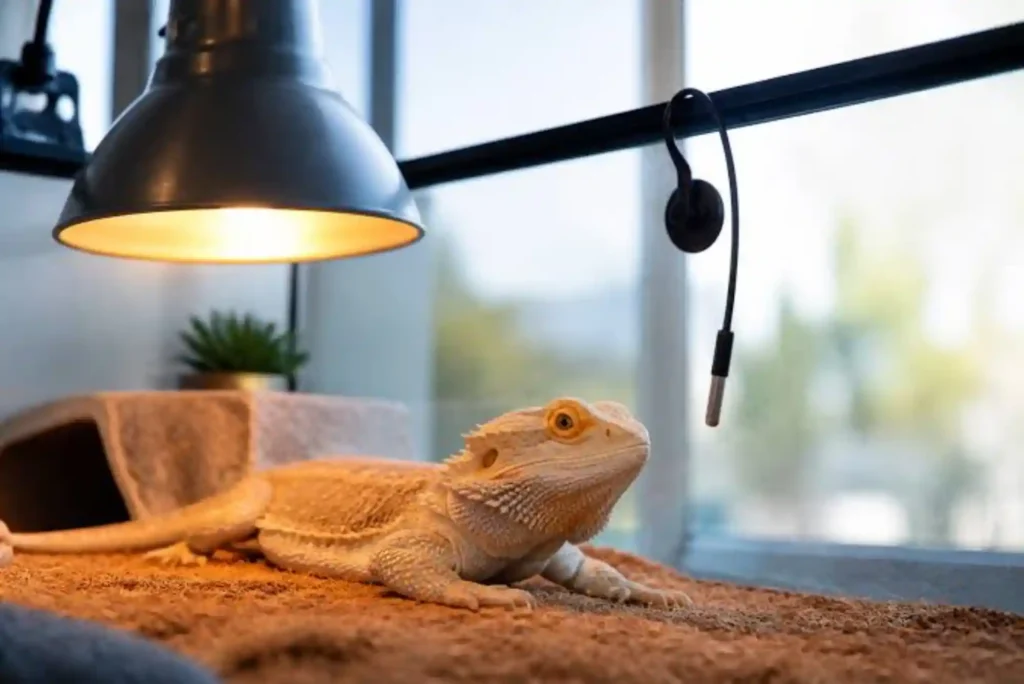
Heat is vital for a cold-blooded desert reptile. Your bearded dragon cannot digest food without proper warmth. You must establish a distinct temperature gradient inside the tank. One side should be hot, while the other stays cool. The basking surface temperature should reach 100 to 110 degrees Fahrenheit. Use a reliable digital thermometer to check this spot daily. The cool side of the enclosure should hover around 75 to 80 degrees. Nighttime temperatures can drop safely to 70 degrees Fahrenheit. Never use colored heat bulbs like red or blue lights. These lights disrupt your pet’s natural sleep cycle. Stick to bright halogen flood bulbs for daytime heating.
The Crucial Role of UVB Lighting
UVB lighting is the most critical part of any enclosure. Without it, your lizard cannot process calcium properly. This leads to a painful and fatal condition called Metabolic Bone Disease. You can learn more about Metabolic Bone Disease Prevention through expert reptile resources. You must use a linear UVB fluorescent tube bulb. Compact coil bulbs do not provide adequate coverage. Popular choices include the ReptiSun 10.0 or Arcadia 12% T5 HO tubes. Mount the UVB tube inside the enclosure above the basking area. Ensure there are no glass or plastic barriers blocking the rays. Replace your UVB bulb every six to twelve months consistently. Even if the light turns on, UVB output degrades over time.


Selecting a Safe and Clean Substrate
Substrate choice sparks heavy debate among reptile keepers. Safety should always guide your final decision. Loose substrates like reptile carpet, tile, or paper towels are great for babies. Baby dragons often ingest loose material by accident. This causes fatal gut impaction and digestive blockages. Adult dragons can sometimes handle safe loose substrates like excavator clay. Avoid calcium sand entirely because pets eat it in excess. Non-adhesive shelf liner or slate tiles are wonderful alternatives. They look clean and make spot-cleaning very easy. Whatever you choose, keep the enclosure hygienic at all times.
Creating the Ideal Interior Decor and Basking Spots
An empty tank will quickly bore your active lizard. Add sturdy branches for climbing and natural exercise. Position a flat basking rock directly under the heat lamp. Include a dark hide box on the cool side. This gives your pet a place to retreat and feel secure. Artificial plants add a touch of color without risks. Avoid toxic live plants that might get nibbled and cause illness. Arrange the decor to create multiple micro-climates and visual barriers. Your dragon will appreciate having options throughout the day. Rearranging items occasionally also provides good mental stimulation.
Hydration and Diet Integration
Lighting and heat directly influence your dragon’s appetite and hydration. Provide a shallow water dish for soaking and drinking. Many dragons refuse to drink standing water from bowls. You may need to mist their greens or use a gentle dropper. Feed juveniles a diet rich in live insects and greens. Adults transition to a diet heavy in leafy vegetables. Dust all feeder insects with high-quality calcium powder regularly. Proper supplementation protects your pet from nutritional deficiencies. Combine good nutrition with your lighting setup for optimal health.
Common Setup Mistakes to Avoid
Many beginners fall into common husbandry traps. Using cheap analog stick-on thermometers is a huge mistake. They are often inaccurate by ten degrees or more. Always invest in digital probe thermometers and a temperature gun. Another common error is placing the UVB light too high. If the bulb is two feet away, the reptile gets zero UVB. Ignoring nighttime drops is another issue to avoid. Unless your house falls below 65 degrees, do not use nighttime heat. Avoiding these pitfalls saves you money and vet bills. Take your time and double-check your measurements before getting a pet.
Conclusion
Setting up a proper reptile habitat takes time and careful planning. You now know the secrets behind a great Bearded Dragon Setup: UVB Lighting, Basking Temperatures & Substrate. Keep monitoring your temperatures and replacing your UVB tubes on schedule. Your scaly friend will reward you with years of joyful companionship. For more expert reptile care tips, visit Vegetative today. Build your dream enclosure and give your pet the best life possible. Share your setup photos or ask questions in the comments below.
Frequently Asked Questions
What is the best UVB light for a bearded dragon?
Linear T5 HO fluorescent tubes like ReptiSun 10.0 are the gold standard. They provide safe and wide UVB coverage across the basking zone.
How hot should a bearded dragon basking spot be?
The basking surface should measure between 100 and 110 degrees Fahrenheit for adults. Baby dragons may prefer slightly higher temperatures around 110 to 115 degrees.
Can I use sand as a substrate for my bearded dragon?
Avoid loose sand for baby dragons due to high impaction risks. Adult dragons can use safe excavator clay mixes if husbandry is otherwise perfect.
How long should bearded dragon lights stay on each day?
Keep all heat and UVB lights on for 12 to 14 hours daily. Turn everything off at night to simulate a natural dark sleeping cycle.
Related Reading: Why Tempeh Chips Are A Flavorful Plant-Based Alternative To Conventional Snacks — full guide